Sunday, September 15, 2013

The Twenties century.

The Twenties century.

         20th-century music is defined by the sudden emergence of advanced technology for recording and distributing music as well as dramatic innovations in musical forms and styles. Because music was no longer limited to concerts, opera-houses, clubs, and domestic music-making, it became possible for music artists to quickly gain global recognition and influence.
         Twentieth-century music brought new freedom and wide experimentation with new musical styles and forms that challenged the accepted rules of music of earlier periods. Faster modes of transportation allowed musicians and fans to travel more widely to perform or listen. Amplification permitted giant concerts to be heard by those with the least expensive tickets, and the inexpensive reproduction and transmission or broadcast of music gave rich and poor alike nearly equal access to high-quality music performances.

Electronic Music.

          For centuries, instrumental music had either been created by singing, drawing a bow across or plucking taught gut or metal strings (string instruments), constricting vibrating air (woodwinds and brass) or hitting or stroking something (percussion). In the early twentieth century, devices were invented that were capable of generating sound electronically, without an initial mechanical source of vibration.
          In the 1950s the film industry also began to make extensive use of electronic soundtracks. From the late 1960s onward, much popular music was developed on synthesizers by pioneering groups like Heaven 17, The Human League, Art of Noise, and New Order.


Folk Music.

          Folk music, in the original sense of the term as coined in the 18th century by Johann Gottfried Herder, is music produced by communal composition and possessing dignity, though by the late 19th century the concept of ‘folk’ had become a synonym for ‘nation’, usually identified as peasants and rural artisans, as in the Merrie England movement and the Irish and Scottish Gaelic Revivals of the 1880s. Folk music was normally shared and performed by the entire community (not by a special class of expert or professional performers, possibly excluding the idea of amateurs), and was transmitted by word of mouth (oral tradition).
          In addition, folk music was also borrowed by composers in other genres. Some of the work of Aaron Copland clearly draws on American folk music.

Bluegrass music 

             Is a form of American roots music, and a sub-genre of country music. Bluegrass was inspired by the music of Appalachia. It has mixed roots inIrishScottishWelsh, and English traditional music, and also later influenced by the music of African-Americans through incorporation of jazz elements.


Popular Music.

            Popular music, sometimes abbreviated pop music (although the term "pop" is used in some contexts as a more specific musical genre), is music belonging to any of a number of musical styles that are broadly popular or intended for mass consumption and wide commercial distribution—in other words, music that forms part of popular culture.

Blues    

        The name given to both a musical form and a music genre  that originated in African-American communities of primarily the "Deep South" of the United States around the end of the 19th century from spiritualswork songsfield hollersshouts and chants, and rhymed simple narrative ballads. The blues form, ubiquitous in jazzrhythm and blues, and rock and roll is characterized by specific chord progressions, of which the twelve-bar blues chord progression is the most common. The blue notes that, for expressive purposes are sung or played flattened or gradually bent (minor 3rd to major 3rd) in relation to the pitch of the major scale, are also an important part of the sound.


Country music

           Is a genre of American popular music that originated in the rural regions of the Southern United States in the 1920s. It takes its roots from the southeastern genre of American folk music and Western musicBlues modes have been used extensively throughout its recorded history. Country music often consists of ballads and dance tunes with generally simple forms and harmonies accompanied by mostly string instruments such as banjoselectric and acoustic guitars,fiddles, and harmonicas.

Disco

          Is a genre of music that peaked in popularity in the late 1970s, though it has since enjoyed brief resurgences including the present day. The term is derived from discothèque (French for "library of phonograph records", but subsequently used as proper name for nightclubs in Paris. Its initial audiences were club-goers from the African AmericangayLatinoItalian American, and psychedelic communities in New York City and Philadelphia during the late 1960s and early 1970s.

Hip hop

          Also called hip-hop, rap music, or hip-hop music, is a music genre consisting of a stylized rhythmic music that commonly accompanies rapping, a rhythmic and rhyming speech that is chanted. It developed as part of hip hop culture, a subculture defined by four key stylistic elements: MCing/rappingDJing/scratchingbreak dancing, and graffiti writing.Other elements include sampling or synthesis, and beatboxing.


Jazz

        Is a music genre that originated at the beginning of the 20th century, arguably earlier, within the African-American communities of the Southern United States. Its roots lie in the combining by African-Americans of certain European harmony and form elements, with their existing African-based music. Its African musical basis is evident in its use of blue notesimprovisationpolyrhythmssyncopation and the swung note. From its early development until the present day, jazz has also incorporated elements from popular music especially, in its early days, from American popular music.


New Age music

      Is an umbrella term for various downtempo music intended to create artistic inspirationrelaxation, and optimism. It is used by listeners for yoga,massagemeditation, and reading as a method of stress management or to create a peaceful atmosphere in their home or other environments, and is often associated with environmentalism and New Age spirituality.


Polka

       Is a Central European dance and also a genre of dance music familiar throughout Europe and the Americas. It originated in the middle of the 19th century in Bohemia. Polka is still a popular genre of folk music in many European countries and is performed by folk artists


Rock and roll

      Is a genre of popular music that originated and evolved in the United States during the late 1940s and early 1950s, primarily from a combination of African-American genres such as bluesjump bluesjazz, and gospel music, together with Western swing andcountry music.Though elements of rock and roll can be heard in blues records from the 1920s and in country records of the 1930s, rock and roll did not acquire its name until the 1950s.

Alternative rock

          Is a genre of rock music that emerged from the independent music underground of the 1980s and became widely popular by the 1990s. Most commonly associated in its heyday with a distorted guitar sound, transgressive lyrics and a nonchalant attitude, its original meaning was broader, referring to a generation of musicians unified by their collective debt to either the musical style, or simply the independent,D.I.Y. ethos of punk rock.


Progressive rock

      Is a rock music subgenre that originated in the United Kingdom, with further developments in Germany,Italy, and France, throughout the mid-to-late 1960s and 1970s. It developed from psychedelic rock and originated, similarly to art rock, as an attempt to give greater artistic weight and credibility to rock music


Punk rock

      Is a rock music genre that developed between 1974 and 1976 in the United KingdomUnited States, and Australia. Rooted in garage rock an d other forms of what is now known as protopunk music, punk rock bands eschewed perceived excesses of mainstream 1970s rock.


Nothing gonna change my love for you-Kaori Kobayashi

The Impressionistic.

The Impressionistic.

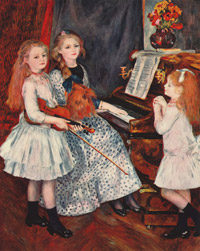
            As the nineteenth century drew to a close, the fine arts entered a new era: called "Impressionism", it lasted only a few decades into the twentieth century. French artists such as Monet, Manet, Renoir and Degas first applied the term, "Impressionism", to paintings. Around 1870, a group of young artists abandoned the accepted school of realism in favor of a new movement in painting, which was dedicated to ideals considered revolutionary by their contemporaries. These artists maintained that for their purposes, realism played now part in achieving an artistic result. They concentrated on the "manner" in which a picture was painted, and were completely unconcerned with subject matter. Their chief aim was to reproduce the general "impression" of the moment made by the subject on the artist. They tended to look at nature with an "innocent eye", seeing the world in a continual state of change with its outlines melting into haze. They would contrast bits of pure color on the canvas, leaving it to the eye of the beholder to do the mixing. Impressionist painters were repelled by the heroic themes of the Romantic painters. The hero of the Impressionist was not man, but light. They chose as subjects dancing girls (ballerinas), picnics, boating, cafe scenes and nature. Their art is the reflection and impression of a magical city: Paris.


Prominent Musical Characteristics:
  • Modal Influences: The medieval modes were attractive to composers who sought to escape the "tyranny" of the major/minor sound. Emphasized were primary intervals -- octaves, fourths, and fifths -- in parallel motion. This resembled a medieval procedure known as "organum", where a melody was harmonized by another which ran parallel to it at a distance of a fourth or fifth.
  • Whole-Tone Scale: Claude Debussy heard the musicians of the Far East (Java, Bali, and Indo-China). He was fascinated by the music of the native orchestra, the gamelan, with percussive rhythms and bewitching instrumental colors. The music of the Far East makes use of certain scales, which divide the octave into equal major/minor system and leads to obscured fluidity.
  • Pentatonic Scale: The pentatonic (five-note) scale is sounded when the black yes of the piano are struck (or also C, D, F, G and A). This scale is popularly associated with Chinese music, but is even more familiar to us through Scottish, Irish and English folk tunes ("Auld Lang Syne" and "Comin' Through the Rye").
  • Impressionist Harmony: Impressionist composers regarded the chord as an entity by itself, a "thrill" that hit the ear with a style all its own. Impressionism released the chord from its function as harmony to movement within the melody.
  • Parallel Motion: In Classicism, tension was produced by moving voices in a contrary fashion. Impressionism, on the other hand, vied chords as melodic entities. This, it was "proper to move voices in a parallel fashion (this was "forbidden" in the Classical era).
  • Escaped Chords: These were harmonies which gave the impression of having "escaped" to another tonality. Such chords are neither prepared for, nor are they resolved in any traditional sense. They simply "evaporate".


impressionism

Romantic Period.

Romantic Period

What is Romanticism?

       Romanticism or the Romantic movement was a concept that encompassed different art mediums; from music to painting to literature. The Romantics believed in allowing their imagination and passion to soar spontaneously and interpret it through their works. This was different from the Classical belief of logical order and clarity. During the 19th century, Vienna and Paris were the centers of musical activity.

            Trends of 19th Century.
Non-musical influences              
                Events and changes that happen in society such as ideas, attitudes, discoveries, inventions, and historical events always affect music. For example, the Industrial Revolution was in full effect by the late 18th century and early 19th century. This event had a very profound effect on music: there were major improvements in the mechanical valves, and keys that most woodwinds and brass instruments depend on. The new and innovative instruments could be played with more ease and they were more reliable . Another development that had an effect on music was the rise of the middle class. Composers before this period lived on the patronage of the aristocracy. Many times their audience was small, composed mostly of the upper class and individuals who were knowledgeable about music. The Romantic composers, on the other hand, often wrote for public concerts and festivals, with large audiences of paying customers, who had not necessarily had any music lessons . Composers of the Romantic Era, like Elgar, showed the world that there should be "no segregation of musical tastes"and that the "purpose was to write music that was to be heard" 

Nationalism

                 During the Romantic period, music often took on a much more nationalistic purpose. For example, Jean Sibelius' Finlandia has been interpreted to represent the rising nation of Finland, which would someday gain independence from Russian control. Other composers, such as Bedřich Smetana, wrote pieces which musically described their homelands; in particular, Smetana's Vltava is a symphonic poemabout the Moldau River in the modern-day Czech Republic and the second in a cycle of six nationalistic symphonic poems collectively titled Má vlast . Smetana also composed eight nationalist operas, all of which remain in the repertory. They established him as the first Czech nationalist composer as well as the most important Czech opera composer of the generation who came to prominence in the 1860s 

                               Keyboard  Forms.
      There were various musical forms that were composed for the piano. Some of the popular compositions were etudes, character pieces , variations , and stylized dances.
Etudes
          The etude was a study that showed off the performer’s technical ability using arpeggios , octaves, scales, and chords.
Character Pieces 
           The character piece was a short programmatic work that had      descriptive titles, such as nocturne, ballade, rhapsody, intermezzo,      and songs without words.
Variations 
            A variation is a virtuoso piece that states a theme and then modifies it through changes of rhythm, meter, and structure.
Stylized Dances
            Stylized dances were popular dance forms such as the waltz , mazurka , polka , and the gallop .


Chopin Bolero Op. 19

The Classic Period.

The Classic Period


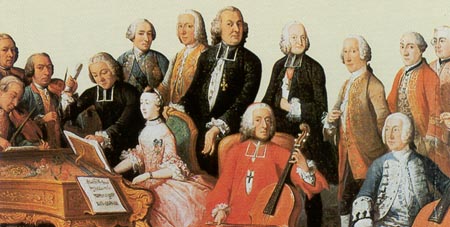
            Classical period in Western music are generally accepted as being between about 1730 and 1820. However, the term classical music is used in a colloquial sense to describe a variety of Western musical styles from the ninth century to the present, and especially from the sixteenth or seventeenth to the nineteenth. This article is about the specific period from 1750 to 1820.
             Although the Classical Era lasted for only 70 years, there was a substantial change in the music that was being produced. Classical music placed a greater stress on clarity with regard to melodic expression and instrumental color. Although opera and vocal music (both sacred and secular) were still being written, orchestral literature was performed on a much broader basis. The orchestra gained more color and flexibility as clarinets, flutes, oboes, and bassoons became permanent members of the orchestra.

           The classical style was dominated by homophony , which consisted of a single melodic line and an accompaniment. New forms of composition were developed to adapt to this style. The most important of these forms was the sonata which was in instrumental music. This form continued to change and evolve throughout the classical period, and it is important to note that the classical sonata was very different from the sonatas written by Baroque composers.
           As classical music evolved, distinctive characteristics developed. Changes in form were seen along with changes in phrase structure. Shorter phraases and well defined cadences became more prevalent. During this time period, a favorite accompaniment pattern was the Alberti bass (name for Dominico Alberti), which featured a broken chord progression.
           The melodies of the Classical era were more compact and diatonic. Harmony was less structured. It used the tonic, dominant, and subdominant chords. In addition, during this period, diatonic harmony was more common then chromatic. Composers mainly used chords in triadic form and occasionally used seventh chords in their compositions.
           The four major composers of the Classical era were Haydn, Mozart, Gluck, and Beethoven. These composers wrote extensively for vocal and instrumental mediums.


                      Forms
Symphony       
      Symphonies were composed by a number of Romantic composers. These symphonies were very different from the ones written during the Classical era. These differences included
 1. Freer form of the internal structure of the movement
 2. Variation on the number of movement
 3. The symphony evolved from a formal design to a creative means of expression
 4. The inner movements had more contrasting keys within them
 5. Solo voices and choral sounds were added to the symphony.

Concerto         
       A concerto was an extravagant showpiece for a virtuoso soloist and orchestra. The violin and piano were the instruments of choice. This form had three movements, which was similar to that of the concerto of the Classical era.

Symphonic Poem (Tone Poem)
         This form was introduced in the mid 1800s by the composer Franz Liszt. It was a one movement, programmatic work based on a literary work or legend and usually had a descriptive title. Examples included Mussorgsky’s Night on Bald Mountain, Debussy’s Prelude to the Afternoon of a Fawn, Smetana’s The Moldau.

Concert Overture         
        This form was a single movement work and was usually found in sonata-allegro form. It was somewhat programmatic and usually had a descriptive title. It was not an orchestral introduction to an opera. A few examples were Tchaikovsky’s 1812 Overture, Mendelssohn’s Fingal’s Cave Overture, and Brahms Academic Festival Overture.

Symphonic Variations
         Very few orchestral works were written in variation form. A few examples of this form are Brahm’s Variations on the Theme of Haydn, Franck’s Symphonic Variations for piano solo and orchestra, and Elgar’s Enigma Variations.

Symphonic Suite
           These are programmatic works in several movements which do not follow the symphonic form. Examples of this were Tchaikovsky’s Nutcracker Suite, Rimsky-Korsikov’s Scheherazade, and Grieg’s Peer Gynt Suite. 
  
Dances
             Orchestral music written in dance forms in pieces composed by Johann Strauss Waltzes, for example.


The Best of Classical Music

The Baroque Age.

The Baroque Age

            Baroque music is a style of Western art music composed from approximately 1600 to 1750. This era follows the Renaissance, and was followed in turn by the Classical era. The word "baroque" comes from the Portuguese word barroco, meaning misshapen pearl, a negative description of the ornate and heavily ornamented music of this period. Later, the name came to apply also to the architecture of the same period.
             Baroque music forms a major portion of the "classical music" canon, being widely studied, performed, and listened to. Composers of the Baroque era includeJohann Sebastian Bach, George Frideric Handel, Alessandro Scarlatti, Domenico Scarlatti, Antonio Vivaldi, Georg Philipp Telemann, Jean-Baptiste Lully, Arcangelo Corelli, François Couperin, Denis Gaultier, Claudio Monteverdi, Jean-Philippe Rameau, Johann Pachelbel, and Henry Purcell.
             The Baroque period saw the creation of tonality. During the period, composers and performers used more elaborate musical ornamentation, made changes in musical notation, and developed new instrumental playing techniques. Baroque music expanded the size, range, and complexity of instrumental performance, and also established opera, cantata, oratorio, concerto, and sonata as musical genres. Many musical terms and concepts from this era are still in use today.

The beginnings of Opera

           In the last years of the sixteenth century, a group of musicians and literati in Florence, Italy experimented with a new method of composing dramatic vocal music, modeling their ideas after the precepts of ancient Greek theater. Their intent was that this new music should prove more direct and communicative to an audience, as the complex polyphony of the Renaissance could very often obscure the text being sung. They instead set a single melodic line against a basic chordal accompaniment, and with this notion of homophony, a new era of music began.
           The Florentine Camerata called this new form of musical-dramatic entertainment opera. The first operas were private affairs, composed for the Italian courts. But when in 1637 the first public opera house opened in Venice, Italy, opera became a commercial industry, and the genre in which many composers throughout history first tried out new ideas and new techniques of composition.
      
           Styles and Forms.
  • Overture – The Baroque suite often began with a French overture ("Ouverture" in French, which was followed by a succession of dances of different types, principally the following four:
  • Allemande – Often the first dance of an instrumental suite, the allemande was a very popular dance that had its origins in the German Renaissance era, when it was more often called the almain. The allemande was played at a moderate tempo and could start on any beat of the bar.
  • Courante – The courante is a lively, French dance in triple meter. The Italian version is called the corrente.
  • Sarabande – The sarabande, a Spanish dance, is one of the slowest of the baroque dances. It is also in triple meter and can start on any beat of the bar, although there is an emphasis on the second beat, creating the characteristic 'halting', or iambic rhythm of the sarabande.
  • Gigue – The gigue is an upbeat and lively baroque dance in compound meter, typically the concluding movement of an instrumental suite. The gigue can start on any beat of the bar and is easily recognized by its rhythmic feel. The gigue originated in the British Isles. 
These four dance types make up the majority of 17th-century suites; later suites interpolate one or more additional dances between the sarabande and gigue:
  • Gavotte – The gavotte can be identified by a variety of features; it is in 4/4 time and always starts on the third beat of the bar, although this may sound like the first beat in some cases, as the first and third beats are the strong beats in quadruple time. The gavotte is played at a moderate tempo, although in some cases it may be played faster.
  • Bourrée – The bourrée is similar to the gavotte as it is in 2/2 time although it starts on the second half of the last beat of the bar, creating a different feel to the dance. The bourrée is commonly played at a moderate tempo, although for some composers, such as Handel, it can be taken at a much faster tempo.
  • Minuet – The minuet is perhaps the best-known of the baroque dances in triple meter. It can start on any beat of the bar. In some suites there may be a Minuet I and II, played in succession, with the Minuet I repeated.
  • Passepied – The passepied is a fast dance in binary form and triple meter that originated as a court dance in Brittany.Examples can be found in later suites such as those of Bach and Handel.
  • Rigaudon – The rigaudon is a lively French dance in duple meter, similar to the bourrée, but rhythmically simpler. It originated as a family of closely related southern-French folk dances, traditionally associated with the provinces of Vavarais, Languedoc, Dauphiné, and Provence.

Best Baroque Music Composers


Renaissance music.

Renaissance music
          
              The Renaissance was a time of rebirth in learning, science, and the arts throughout Europe. The rediscovery of the writings of ancient Greece and Rome led to a renewed interest in learning in general. The invention of the printing press allowed the disbursement of this knowledge in an unprecedented manner. The invention of the compass permitted the navigation of the world's oceans and the subsequent discovery of lands far removed from the European continent. With Copernicus' discovery of the actual position of the earth in the solar system and Martin Luther's Protestant Reformation, the Catholic Church lost its grip on society and a humanist spirit was born. This spirit manifested itself in the painting and sculpture of Michelangelo, the plays of Shakespeare, and in both the sacred and secular dance and vocal music of the greatest composers of the era.


   Dance music of the Renaissance
 Style and trends
             Throughout the Renaissance instrumental dance music flowered and thrived, and was composed, or more likely improvised, by many people. Musicians whose names have come down to us collected much of this existing music and had it published in various volumes over the years. TheTerpsichore of Michael Praetorius (c.1571-1621) and the dance music of Tielman Susato (c.1500-1561) represent some of the outstanding examples of dance music from the late Renaissance. A piece such as La Spagna, (attributed to Josquin des Prez) is an excellent example of the buoyant rhythms and sounds of the Renaissance dance. Many of these dance forms were modified and developed by later composers and found their way into the Baroque dance suite.
             The increasing reliance on the interval of the third as a consonance is one of the most pronounced features of early Renaissance European art music (in the Middle Ages, thirds had been considered dissonances: see interval). Polyphony, in use since the 12th century, became increasingly elaborate with highly independent voices throughout the 14th century: the beginning of the 15th century showed simplification, with the voices often striving for smoothness. This was possible because of a greatly increased vocal range in music—in the Middle Ages, the narrow range made necessary frequent crossing of parts, thus requiring a greater contrast between them.
             The modal (as opposed to tonal) characteristics of Renaissance music began to break down towards the end of the period with the increased use of root motions of fifths. This has since developed into one of the defining characteristics of tonality.


     Instruments

            Many instruments originated during the Renaissance; others were variations of, or improvements upon, instruments that had existed previously. Some have survived to the present day; others have disappeared, only to be recreated in order to perform music of the period on authentic instruments. As in the modern day, instruments may be classified as brass, strings, percussion, and woodwind.
             In the beginning of the 16th century, instruments were considered to be less important than voices. They were used for dances and to accompany vocal music. Instrumental music remained subordinated to vocal music, and much of its repertory was in varying ways derived from or dependent on vocal models.


 Pavana el Todesco : Renaissance italian music 


Friday, September 13, 2013

Music of ancient Rome.

Music of ancient Rome.
           The music of ancient Rome was a part of Roman culture from earliest times. Music was customary at funerals, and the tibia, a woodwind instrument, was played at sacrifices to ward off ill influences. Song  was an integral part of almost every social occasion. The Secular Ode of Horace, for instance, was commissioned by Augustus and performed by a mixed children's choir at the Secular games in 17 BC. Under the influence of  ancient Greek theory, music was thought to reflect the orderliness of the cosmos, and was associated particularly with mathematics and knowledge.

Etruscan music had an early influence on that of the Romans. During the Imperior period, Romans carried their music to the provinces, while traditions of  Asian minor,North African and Gaulbecame a part of Roman culture.
Music accompanied spectacles and events in the arena, and was part of the performing arts forn called Pantominus, an early form of story ballet that combined expressive dancing, instrumental music and a sung libretto.

        Music in Society.
        In spite of the purported lack of musical originality on the part of the Romans, they did enjoy music greatly and used it for many activities. Scott recounts the obvious military uses of the tuba for signaling, as well as music for funerals, private gatherings, public performances on the stage and large gladiatorial spectacles. Music was also used in religious ceremonies. The Romans cultivated music as a sign of education. Music contests were quite common and attracted a wide range of competition, including Nero himself, who performed widely as an amateur and once traveled to Greece to compete.
          There are also numerous references to the pervasive presence of music in ancient Rome, music even on a very large scale — hundreds of trumpeters and pipers playing together at massive games and festivals — and even of normally hand-held citharas built as large as carriages.

             Ancient Rome Music Instruments
-Wind instruments
  • The cornu  was a long tubular metal wind instrument that curved around the musician's body, shaped rather like an uppercase G. It had a conical bore and a conical mouthpiece. It may be hard to distinguish from the buccina. The cornu was used for military signals and on parade.
  • The tibia , usually double, had two double-reed  pipes, not joined but generally played with a mouth-band to hold both pipes steadily between the player's lips.
  • The askaules — a bagpipe.
  • The Roman tuba was a long, straight bronze trumpet with a detachable, conical mouthpiece like that of the modern French horn.          
-String instruments
  • The lyre, borrowed from the Greeks.The strings were tunable by adjusting wooden wedges along the cross-bar.
  • The lute, the true forerunner of the guitar , The Roman lute had three strings and was not as popular as the lyre or the cithara, but was easier to play.
  • The cithara ,was the premier musical instrument of ancient Rome , the cithara was a loud, sweet and piercing instrument with precision tuning ability. It was said some players could make it cry.
- Organ
  •  The hydraulic pipe organ , which worked by water pressure, was "one of the most significant technical and musical achievements of antiquity". Essentially, the air to the pipes that produce the sound comes from a mechanism of a wind-chest connected by a pipe to a dome; air is pumped in to compress water, and the water rises in the dome, compressing the air and causing a steady supply to reach the pipes The instrument goes back to the ancient Greeks and a well-preserved model in pottery was found at Carthage in 1885.
- Percussion
  • The sistrum ,was a rattle consisting of rings strung across the cross-bars of a metal frame, which was often used for ritual purposes.
  • Cymbala ,were small cymbals: metal discs with concave centres and turned rims, used in pairs which were clashed together


Synaulia - Music From Ancient Rome